
(561) 328-9050
A lot of adults carry around some version of the same quiet frustration: crooked or crowded teeth that never got addressed as a teenager, or a smile that’s gradually shifted over the years since braces came off and a retainer stopped getting worn as often as it should have. The idea of fixing it now, as a working adult, tends to run into the same objection every time nobody wants a mouth full of visible metal at this stage of life.
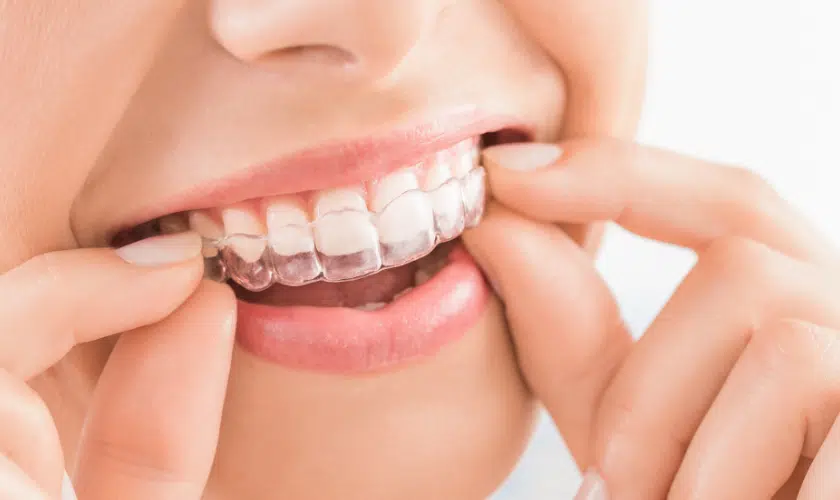
Clear aligner treatment through Invisalign in Loxahatchee solves exactly that problem at Groves Dental Care. A custom series of clear, removable trays gradually shifts teeth into better alignment without the brackets and wires of traditional braces, meaning most people around you won’t even notice you’re actively in treatment.
Why so many adults are choosing this option over traditional braces
Beyond the obvious cosmetic appeal, clear aligners fit into daily life in a way that traditional braces sometimes can’t. They’re removable for meals, meaning there’s no need to avoid sticky or hard foods the way you would with brackets and wires. They’re easier to keep clean, since flossing and brushing don’t have to work around fixed hardware. And for a lot of working adults, the fewer in-office visits required compared to monthly brace adjustments make the whole process easier to fit around a busy schedule.
What makes clear aligners a popular choice specifically in Loxahatchee:
- Nearly invisible, which matters for adults in client-facing or public-facing roles
- Removable for meals, unlike fixed metal or ceramic braces
- Fewer required in-office visits compared to traditional orthodontic adjustments
- Comfortable enough that most patients adjust to a new tray within a day or two
- Often a shorter overall treatment timeline for mild-to-moderate cases
- Easier to maintain thorough oral hygiene throughout the entire treatment process
For Loxahatchee’s more rural, spread-out community, that reduced number of office visits matters more than it might in a denser city, since fewer required trips to the office means less time spent driving back and forth for routine adjustments that traditional braces would otherwise require.
What treatment actually looks like from start to finish
The process begins with a digital scan or set of impressions, used to map out a projected series of tooth movements, tray by tray, toward your final result. Once your custom aligners arrive, you’re given a full set to begin wearing in sequence, typically switching to the next tray every one to two weeks. Most patients wear their aligners between 20 and 22 hours a day, removing them only to eat, drink anything other than water, and brush and floss.
Periodic check-in appointments, usually spaced every six to eight weeks, allow the team at Groves Dental Care to confirm your treatment is tracking as planned and make any small adjustments if needed along the way. Because these check-ins happen far less frequently than the monthly adjustments traditional braces require, many patients find the schedule considerably easier to manage, especially those balancing work, family, or a longer commute.
Common concerns Invisalign is used to address:
- Mild to moderate crowding that’s gradually worsened over the years
- Gaps or spacing issues that have persisted since childhood
- Teeth that have shifted since wearing braces as a teenager
- Minor bite alignment concerns that affect chewing comfort
- General dissatisfaction with how a smile looks in photos or everyday interactions
Why the discreet nature of treatment matters so much to adult patients
A lot of adults specifically avoid orthodontic treatment because of how visible braces would be during work meetings, family gatherings, or simply everyday conversations. Clear aligners remove that barrier almost entirely. Because the trays are clear and fit closely against the teeth, most people won’t notice unless they’re looking very closely, which means patients can go through an entire course of treatment without it becoming an obvious topic of conversation unless they choose to bring it up themselves.
That discretion has made Invisalign a particularly popular choice among working professionals, parents managing a household on top of a job, and anyone simply hoping to avoid the self-consciousness that can come with a more visible orthodontic option.
A few pointers if you’re considering Invisalign:
- Be realistic about your ability to stick to the recommended 20 to 22 hours of daily wear, since consistency directly affects your treatment timeline
- Keep a simple case with you to store your trays safely whenever you remove them to eat
- Ask about attachments, small tooth-colored bumps sometimes added to help trays grip properly, since these are common and not a sign anything’s gone wrong
- Plan ahead for your retainer phase after treatment, since maintaining your results long-term depends on consistent retainer wear afterward
- Don’t assume your case is too complex for aligners until you’ve actually had a consultation, since treatment technology has advanced to handle a wider range of cases than it used to
FAQs
How long does Invisalign treatment usually take?
It varies by case, but many adult patients complete treatment somewhere between six months and eighteen months, depending on the extent of the correction needed.
Will people be able to tell I’m wearing aligners?
Not typically. The trays are clear and fit closely to the teeth, so most people won’t notice unless they’re specifically looking for it.
Does it hurt to switch to a new tray?
There’s usually mild pressure for a day or so after switching, similar to the feeling of light braces tightening, which then fades as your teeth adjust.
Can Invisalign address more than just crowding?
Yes, it’s commonly used for a range of mild-to-moderate concerns, including spacing and some bite alignment issues, though a consultation is the best way to confirm what’s realistic for your specific case.
What happens if I don’t wear my trays as consistently as recommended?
Inconsistent wear can extend your overall treatment timeline, since the trays are designed around a specific, steady schedule of gradual movement.
Will I need a retainer once treatment is finished?
Yes, wearing a retainer afterward is an essential part of maintaining your results, regardless of which orthodontic treatment option you originally chose.
Is Invisalign a good option for someone with a busy schedule or long commute?
Often yes, since the less frequent check-in visits required, compared to traditional braces, tend to make the whole process easier to manage for patients balancing work, family, or a longer drive to the office.
What if I lose or damage a tray partway through treatment?
It happens more often than people expect. The office can typically help you move forward temporarily or arrange a replacement, depending on where you are in your treatment plan.
If your smile has shifted more than you’d like since your last set of braces, or crowding has simply bothered you for years without ever feeling urgent enough to address, a consultation is a low-pressure way to see what treatment would realistically involve. Most patients are pleasantly surprised by how manageable the process turns out to be, and by how little it actually disrupts daily life along the way.
Return to Blog Homepage